


Pakistan has never been short of sporting talent. What has remained elusive is the ability to consistently convert that talent into performances when the stakes are highest.
Athletes who dominate at home can sometimes struggle when confronted with international pressure. A single mistake, a hostile environment, unfamiliar conditions or the weight of national expectations can suddenly turn confidence into hesitation. The difference, in many such situations, is not physical ability—it is the ability to control the mind.
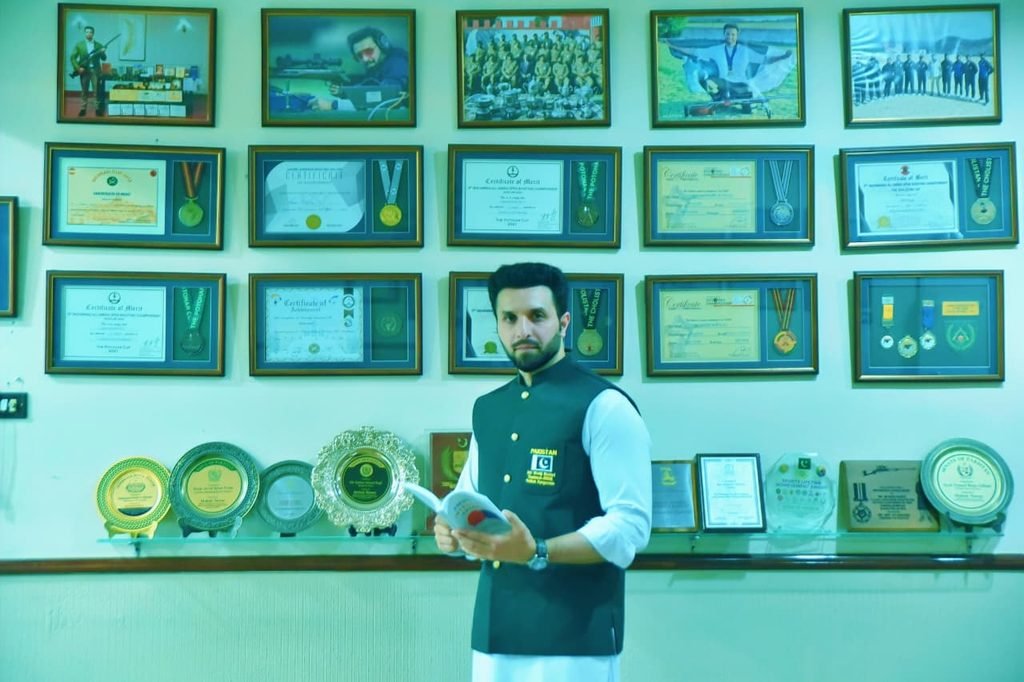
This is precisely where decorated F-Class long-range shooter and sports psychologist Mohsin Nawaz believes Pakistan’s sporting system needs a fundamental rethink.
His argument is straightforward but significant: mental preparation should not be an emergency service for athletes heading to major competitions; it should be an integral part of their development from the beginning.
Having served as Pakistan’s first official Sports Psychologist at the 6th World Nomad Games 2026, Mohsin has seen first-hand the psychological demands that accompany elite competition. His experience has strengthened his belief that athletes must be prepared not only to compete, but also to deal with the emotions, expectations and uncertainty that come with competing at the highest level.
In modern sport, physical conditioning and technical preparation are only part of the equation. An athlete may possess extraordinary skill and still fail to reproduce it under pressure. Anxiety can disrupt concentration. Fear of failure can affect decision-making. A previous mistake can remain in the mind long after the moment has passed. The expectation of winning can itself become a burden.
Mohsin believes these challenges must be addressed systematically. Pressure management, stress and anxiety control, goal setting, visualisation, concentration techniques and simulated-pressure exercises, in his view, should become routine components of training.
“Rather than attempting to eliminate competitive pressure, our goal must be to equip athletes with practical tools to manage it and remain focused on execution,” he says.
That philosophy carries particular weight coming from someone with a competitive shooting background. In F-Class long-range shooting, precision is inseparable from patience and concentration. A technically perfect shot can be compromised by a momentary lapse in focus or emotional control. The discipline therefore offers a natural example of how closely performance is linked to psychological stability.
Perhaps the most important change Mohsin is advocating is cultural. Sports psychology in Pakistan has often been viewed as something athletes may need when they are struggling or immediately before a major event. Mohsin wants that perception replaced by a preventive and developmental approach.
Federations, coaches and sporting institutions, he argues, should incorporate psychological preparation into long-term athlete development.
That could include psychological assessments, individual athlete profiles, mental-skills programmes, confidence-building exercises and team-cohesion activities.
The objective should not simply be to help an athlete cope after something goes wrong. It should be to prepare the athlete before the pressure arrives. That distinction matters.
The strongest competitors are not necessarily those who never feel nervous or disappointed. They are often those who understand their emotional responses and possess the tools to regain control quickly.
Mohsin’s sporting vision extends beyond mental preparation. A recipient of the Tamgha-e-Imtiaz and a Lifetime Achievement Award, he brings together experience as a shooter, sports psychologist and sports-development advocate.
His professional associations include roles as an official Brand Ambassador for Kahles Optics and Peregrine Bullets, while he also maintains an association with HawkSmith Gun & Sporting Club.
His wider vision includes improved sporting infrastructure and modern training environments. A proposed collaboration with HawkSmith seeks to introduce premium shooting and sports facilities in Pakistan, potentially creating additional opportunities for athletes to train in structured and professional surroundings.
For Mohsin, however, infrastructure is only one part of the equation. A modern facility can provide the setting, equipment can provide the tools and a qualified coach can provide technical guidance. But the athlete still has to perform when the pressure arrives. That is where mental preparation becomes critical.
Pakistan’s emerging athletes frequently face another challenge: limited exposure to the psychological realities of elite international competition.
Training sessions may be controlled and predictable. Major competitions rarely are. Crowds, expectations, unfamiliar venues, stronger opponents, travel fatigue and the significance of representing the country can create an entirely different environment.
Mohsin’s answer is to bring some of that pressure into training. If athletes repeatedly practise decision-making and execution under simulated pressure, the international arena can become less unfamiliar. They can learn how to respond to mistakes, control their breathing and concentration, reset after setbacks and return their attention to the task immediately in front of them.
This is not about creating fearless athletes. It is about creating athletes who can perform despite fear.
The larger question raised by Mohsin’s philosophy is whether Pakistan is developing athletes—or merely preparing competitors for individual events.
If the objective is sustainable international success, the answer has to go beyond talent identification. Pakistan needs systems that develop the complete athlete: physically prepared, technically equipped and psychologically resilient.
Mental conditioning should therefore begin at the grassroots level and continue throughout an athlete’s career. Coaches should understand its importance, federations should allocate resources for it and athletes should regard it as seriously as physical conditioning.
There is no single solution to Pakistan’s sporting challenges. Better infrastructure, professional coaching, competitive opportunities, sports science and institutional planning all have their place. But mental strength deserves a permanent seat at that table.
Mohsin Nawaz’s message ultimately goes beyond sports psychology. It is a call to rethink how Pakistan understands sporting excellence.
Winning is rarely decided by talent alone. At the decisive moment, an athlete must be able to trust preparation, recover from mistakes, maintain concentration and execute under pressure.
That ability does not simply appear on competition day. It is developed through consistent training. For Pakistan, where talented athletes continue to emerge across different disciplines, investing in that psychological dimension could help bridge the gap between potential and performance.
The most important contest for an athlete may sometimes begin before the starting whistle, the opening serve or the first shot. It begins in the mind.
And if Pakistan wants its sporting talent to produce more consistent international results, perhaps it is time to train that mind with the same seriousness as the body.